
Why marketing leaders must play the long game
Written by Sandra Moore, a Passionfruit Partner. You can follow her journey on LinkedIn.

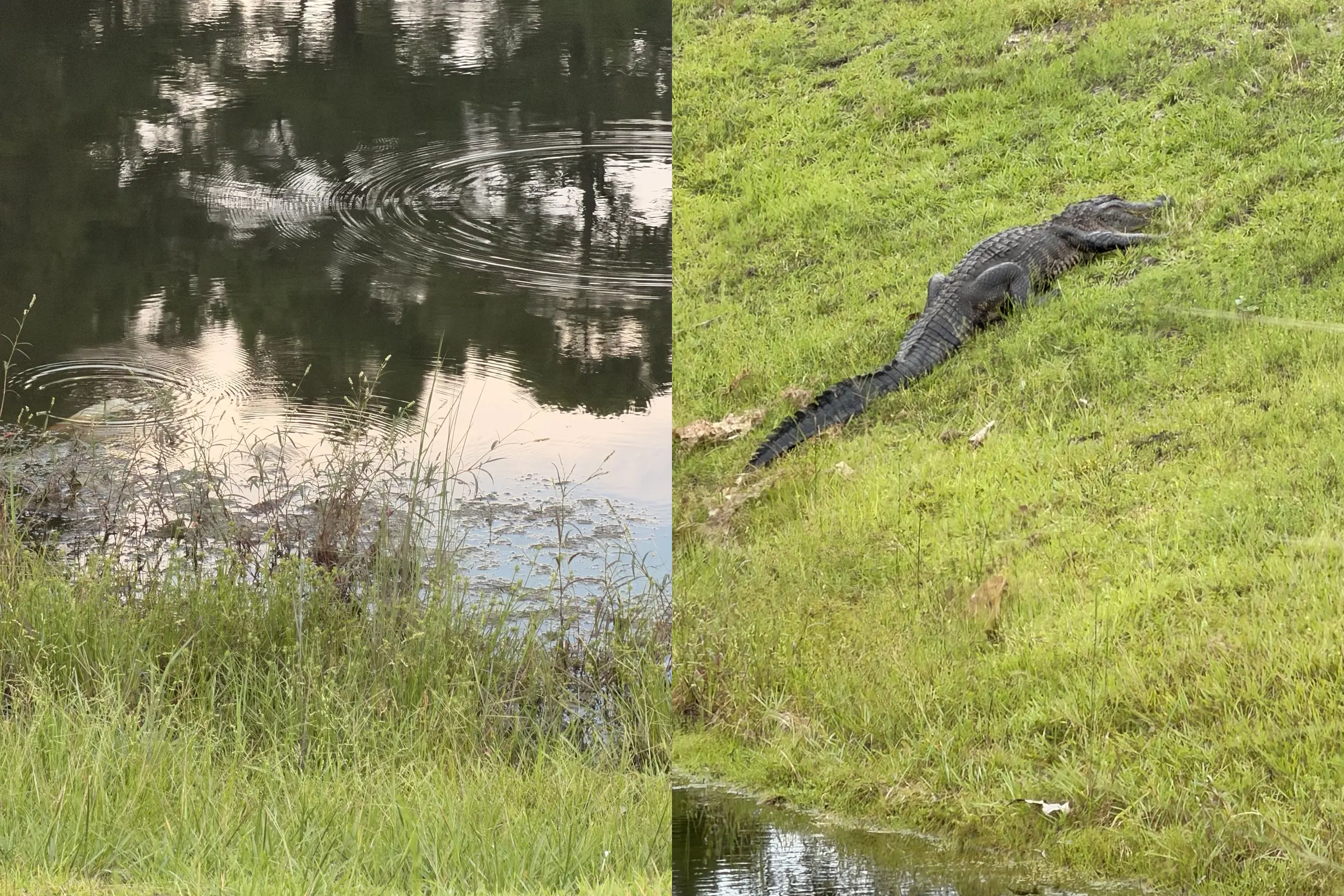
There is a large alligator in the pond next to my house. For those of you who live in the far south, this may be a common sight. But for me? It’s a little bit terrifying to see a dinosaur up close and personal. Apparently, alligators like marshmallows. And when I take my small dog for a walk past the pond, it strikes me that he looks like a walking marshmallow as I keep one eye on the sidewalk and one on the pond.
I’ve been able to observe the gator over the past few months and watch him grow (I’m just assuming it’s a dude gator in hopes it won’t lay eggs for more baby alligators). He sits quietly in the pond, eyes and snout out, waiting to strike as he looks for food on the bank or in the water, moving about, doing his own kind of observation and research. I’ve seen him eat frogs and my neighbor swears we had more turtles in the pond but now, not so many.
His patience is what I find most interesting – and it’s exactly what’s missing from modern brand marketing. In today’s fast-paced world, a CMO’s role is often to drive the business faster, with new tech at our fingertips, and even more scrutiny on revenue-driving actions, and it has become harder to build and grow brands.
We struggle with the long game of brand building. Not because we find it any less important, but because of the remit put in front of us by leadership. I’ve seen tons of job descriptions with “player/coach” and “roll up your sleeves and dig in”, and even more obvious ones that say “this isn’t a brand building role, this is true performance marketing”. And patience for brand building is short.
Marketers know and believe in the value of building a brand for long term growth. And if done well with actionable research, a strong team who understands how to do this, and the ability to define a brand voice, architecture and Reasons to Believe (RTBs), it is still magical. The brand vision sparks and becomes a beast for growth – in relevance, in its target audience, in strategy for the organization and in driving the relentless pursuit of growth. Like the gator though, it requires the patience to identify the long-term positioning (like finding the right areas of the pond to observe) and the short-term need for growth (grabbing frogs on the bank in the gator’s case).
I love the research psychological question of comparing a brand to a person/animal/vehicle – if X brand was an animal, what kind would it be and why? It’s fascinating the answers you’ll get from people. We asked that question for a brand I previously worked on and most often the animal that came up for the brand was turtle. It was slow, hasn’t evolved in years and simply wasn’t very exciting (sigh!). And it was a wonderful and insightful jumping off point to identify the direction we wanted to take the brand.
In the meantime, the pressure on the tactical side of marketing is ever present. And the questions of brand strategy become mired in the need for immediate results – why isn’t it working? Is it working? Should we be spending money on this versus driving purchase? When are we going to see the real impact of focusing on the brand? In my opinion, the answer is always consistent - we should be doing both and timing depends on internal and external factors. But the longer you can focus the efforts on building a brand, the healthier the strategy, and sales will always come later. It will also be less expensive in the long run to keep customers because they love/believe in the brand.
Navigating this constant tension between tactical speed and long-term brand health is exactly why I am enjoying the new tools we have today with AI, and looking at my pond-dwelling friend, the connection is hard to miss. Alligators are essentially living dinosaurs; they have survived millions of years of environmental shifts by adapting to their surroundings without ever losing their core identity as apex predators. Brand marketing requires that same evolutionary endurance.
About every five to seven years, the Wild West of marketing shifts and forces us to adapt—think back to the mid-2000s when social media was just taking off, or when driving digital leads was suddenly the "new thing." Today, AI is our latest evolutionary leap. It allows us to adapt to a faster, more demanding ecosystem by accelerating research, sparking new ideas, and automating mundane journeys. But just as the alligator relies on its ancient, fundamental instincts, this new digital world will always require humans at the end of the line pulling the strings. We use new technology to survive the tactical shifts and leapfrog our capabilities, but rational thought, vision, and patience remain the core DNA required to build an enduring brand.
And the importance of a strong brand will always be there. It will endure long after immediate sales and fast decisions to drive a salesperson’s pay plan. It will build a connection with consumers that invigorates their belief in the brand, their love for the brand and reinforces their decisions to be a part of it.
If a reptile can do this consistently and successfully, why can’t marketing? In the meantime, I’ll enjoy watching this beast do his thing and I’ll continue to build brands and drive growth – all while keeping an eye on the pond….just in case.
Written by Sandra Moore, a Passionfruit Partner. You can follow her journey on LinkedIn.
